The best time to visitAconcaguaisDecember and January.
Mid-December to the end of January, when the weather on the mountain is usually at its steadiest and the park's helicopter and medical services are running; it is also the busiest stretch.
EstimatedAs of November 27, 2026, from 33 sources.
Rain142 mm in June, 15 mm in March5.6 inches in June, 0.6 inches in March
Peak seasonShoulder seasonLow seasonOut of season
We have not found monthly visitor counts for Aconcagua, so the bars show the season, not a count. A full drop is 400 mm of rain in a month, on every page.A full drop is 15.7 inches of rain in a month, on every page.
Aconcagua in January
Peak seasonOur pick
17° / 6°63° / 42°day and night, °C°F
37 mm1.5 inof rain
8 dayswith rain
Sunrise
6:45 am
Sunset
8:50 pm
Daylight
14 h 5 min
Mid-month times for a level horizon. Mountains hide the sun for longer.
Peak period: the park's busiest weeks run to February 1, and high-risk activities such as south-face climbs are banned.
All 5 sources that cover January point to peak season.
Mid-month times for a level horizon. Mountains hide the sun for longer.
Fewer climbers after February 1; medical services run mainly to February 15. Carnival long weekend February 6 to 9, 2027.
The 4 sources that cover February split evenly: 2 point to peak season and 2 to shoulder season. The two peak-season sources are a trekking blog and a climbers’ wiki; the two climbing operators call February quieter, and the park’s peak period ends February 1, so we call it shoulder season.
Jan 1 to Feb 1Peak period on the mountain. The park's peak visitor period, December 25 to February 1 each summer season: most expeditions are on the mountain and base-camp crowds are heaviest. About 80% of climbers come from December 15 to January 31, according to Kandoo Adventures13; Plaza de Mulas then houses hundreds of climbers and trekkers28.
Feb 6 to 9Carnival long weekend. Four-day national holiday weekend in the Argentine summer holidays; visitors to the Horcones sector are mostly Argentine and regional tourists.
Mar 24 to 28Easter (Semana Santa) five-day weekend. The March 24 holiday, Holy Thursday and Good Friday make a five-day break; in 2025-26 the park allowed overnight treks until Easter.
Dec 25 to 31Peak period on the mountain. The park's peak visitor period, December 25 to February 1 each summer season: most expeditions are on the mountain and base-camp crowds are heaviest. About 80% of climbers come from December 15 to January 31, according to Kandoo Adventures13; Plaza de Mulas then houses hundreds of climbers and trekkers28.
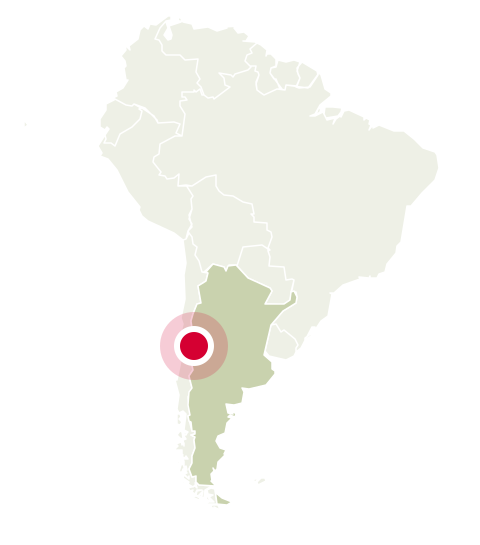
Where it is
In ArgentinaClimbing Aconcagua (6,961 m) on an expedition of about three weeks, and trekking to its base camps at Confluencia, Plaza Francia and Plaza de Mulas, inside the park's summer season; the short walk to the Horcones lagoon near the entrance draws far more day visitors.
Getting to Aconcagua
Fly to Mendoza (MDZ). The park’s Horcones entrance is about 180 to 190 km west of the city on Route 7, 2.5 to 3 hours by car; Andesmar buses take about 3 h 35 min from Mendoza to Puente del Inca, near the entrance, three times a day.
Source: Dicas Argentina, Earth Trekkers and Central de Pasajes
How many days in Aconcagua
Guides plan about 20 days to climb Aconcagua: Responsible Travel’s guided climb takes 20 days, and Ian Taylor Trekking’s departures run 19 to 20 days.
Source: Responsible Travel and Ian Taylor Trekking
Treks are shorter: kimkim’s Plaza Francia trek takes 5 days from Mendoza, and Confluencia is a day trip, about 4 to 6 hours on foot there and back.
Source: kimkim, Earth Trekkers and Dicas Argentina
Combine it with
Places that travel publishers pair with Aconcagua. The dots mark the months when both are in shoulder season.
Here, the park’s season and its services decide the trip as much as the weather does.
BestPossibleNot recommendedClosed
The climb
Estimated
JanFebMarAprMayJunJulAugSepOctNovDec
Mid-December to the end of January, when the weather on the mountain is usually at its steadiest and the park's helicopter and medical services are running; it is also the busiest stretch.
Source: Responsible Travel, Atlas & Boots, Kandoo Adventures and Mendoza’s Dirección de Áreas Protegidas
Climbing with fewer people on the mountain
Estimated
JanFebMarAprMayJunJulAugSepOctNovDec
February often brings good climbing conditions with far fewer climbers, though mid-February is normally the last week to start a climb.
Source: Ian Taylor Trekking
Treks to Confluencia and Plaza Francia
Official
JanFebMarAprMayJunJulAugSepOctNovDec
Treks to Confluencia and Plaza Francia run in the park's summer season: in 2025-26, day treks were allowed from November 15 to April 10, and December to March is the steadiest stretch.
Source: Diario El Sol, reporting the 2025-26 decree, and Dicas Argentina
The Horcones lagoon walk
Official
JanFebMarAprMayJunJulAugSepOctNovDec
The short walk to the Horcones lagoon, near the park entrance, is open all year, weather permitting; in 2024 it reopened on October 16 after heavy snow.
Source: Gobierno de Mendoza and Diario UNO
The seasons in Aconcagua
We have not found monthly visitor counts for Aconcagua, so these seasons are an estimate: peak season is the months that sources name as peak or that fall in school holidays and major events.
Peak season
Includes our pick
January
Days 17°C, nights 6°CDays 63°F, nights 43°F
Rain: 37 mmRain: 1.5 in
Fills up: Peak period on the mountain
Shoulder season
February and March
Days 17 to 18°C, nights 5 to 6°CDays 63 to 64°F, nights 41 to 43°F
Rain: 15 to 20 mm a monthRain: 0.6 to 0.8 in a month
Fills up: Carnival long weekend; Easter (Semana Santa) five-day weekend
Low season
April
Days 11°C, nights 2°CDays 52°F, nights 36°F
Rain: 48 mmRain: 1.9 in
Out of season
May to October
Days 0 to 5°C, nights −7 to −3°CDays 32 to 41°F, nights 19 to 27°F
Rain: 62 to 142 mm a monthRain: 2.4 to 5.6 in a month
Closed: Base-camp treks and expeditions outside the summer season
Shoulder season
Includes our pick
November and December
Days 9 to 14°C, nights 0 to 3°CDays 48 to 57°F, nights 32 to 37°F
Rain: 26 to 40 mm a monthRain: 1.0 to 1.6 in a month
Fills up: Peak period on the mountain
Where sources disagree
We compare every source month by month. This is where they split, and how we decided.
Is February busy on Aconcagua?
January and February are the most crowded months, for the Confluencia trek
Dicas Argentina
January and February are busier, with possibly better weather
SummitPost
Crowds are often much smaller in February
Ian Taylor Trekking
February 1 to 20 is mid season, with less busy trails
Kandoo Adventures
The peak visitor period runs from December 25 to February 1
Mendoza’s Dirección de Áreas Protegidas
Our call: February is shoulder season; both climbing operators call it quieter, and the park’s peak period ends February 1.
Is December high season on Aconcagua?
December and January bring the largest number of climbers
Ian Taylor Trekking
December 1 to 14 is mid season, and high season runs from December 15 to January 31
Kandoo Adventures
December is colder but less crowded
SummitPost
The peak visitor period starts December 25
Mendoza’s Dirección de Áreas Protegidas
Our call: December is shoulder season; its last week falls in the park’s peak period, listed under Dates that fill up.
When does the climbing season on Aconcagua end?
The off season starts February 21
Kandoo Adventures
The season continues until the beginning of March, and mid-February is normally the last week to enter the park
Ian Taylor Trekking
The official park season ends March 15
Aconcagua Treks
The season runs to late March, with more changeable weather at the edges
Atlas & Boots
The summer season runs from November 1, 2025 to April 30, 2026
Diario El Sol, reporting the 2025-26 decree
Our call: March is shoulder season, with mixed conditions; most expeditions finish by early March, while treks still ran through March in 2026.
Aconcagua visitor numbers
As of November 27, 2026, the latest figures we have for Aconcagua run through April 2026.
MeasuredOne total a year
2025-26 season
106,575
Visitors to the Horcones sector (the visitor center, the short circuit and the lagoon), by the provincial government's count, as reported by Diario UNO. The 2024-25 total, more than 83,000 visitors to the park, was defined differently, so no change is given.
The park publishes season totals, not monthly counts; climbers are counted apart (3,449 ascents in 2024-25). Next update: January 2027.
Horcones entrance (park gate). ERA5 modeled averages for 2015 to 2024. Rain is the monthly total. Open-Meteo at the Horcones entrance (grid about 2,900 m) is primary: highs about 17 to 18°C in January and February, with nights below freezing from May to October. The mountain above is far colder. Puente del Inca (2,720 m), the nearest weather station, agrees that most rain and snow falls from May to August.
Know before you go
As of November 27, 2026.
Rules and fees (3)
High-risk activities banned in the peak weeks
South-face ascents, glacier skiing, paragliding, BASE jumps and similar activities are banned December 20 to February 1 each summer season and allowed only November 1 to December 20 and February 1 to April 30; applications are due at least 30 business days ahead (Resolution 617/2026).
Ascent and long-trek permits (2026-27)
Ascent and long-trek permits require insurance or an evacuation service covering search, rescue or evacuation and medical care up to 5,500 m; paid permits are not refunded and nominated permits are non-transferable; entry dates are tentative. Presale prices through licensed providers until September 30, 2026: ascent via Horcones USD 950 for foreigners, long trek via Horcones USD 450, ascent via Vacas USD 1,290 (paid in pesos).
Rescue and medical coverage window
The park's air and medical services operate mainly December 1 to February 15 (the official coverage period in the 2025-26 decree, s13; Resolution 617/2026, s11). The helicopter tender for 2026-27 to 2030-31 guarantees 150 flight hours a season (Decreto 2055/2026, s15).
Book ahead (5)
Ascent and long-trek permits
Book: Before arrival; 2026-27 presale ran to September 30, 2026
Sold through the park's Aconpass system and licensed service providers; nominated permits are non-transferable and paid permits are not refunded.
High-risk activity applications
Book: At least 30 business days
South-face, glacier-ski, paragliding and similar plans need an application at least 30 business days ahead, and only outside December 20 to February 1.
Day-trek permit
Travelers advise: Before the day
One travel blog says the hiking permit is bought online in advance from the government site and is not sold at the park.
Peak-season expeditions, mules and porters
Travelers advise: Well ahead for the peak weeks
At the height of the season mules and porters are pre-booked and lodging is full (Aconcagua Treks); Ian Taylor Trekking's December 1 to January 20 listing was marked sold out (page updated February 3, 2026).
Guided Confluencia treks in high season
Travelers advise: Book ahead
Groups are kept small for safety, and high season sells out easily (Dicas Argentina).
Closures (3)
Base-camp treks and expeditions outside the summer season
May to October, every year
The park's summer season runs November 1 to April 30 (the 2025-26 decree, s13, s25), and Resolution 617/2026 sets its periods within the same span each season1; May 1 to October 31 is the winter season3, as in earlier seasons8, 11. In 2025-26, day treks were allowed November 15 to April 10 and overnight treks until Easter3. The Horcones lagoon and valley stay open all year, weather permitting6, though heavy snow closes the lagoon trail at times; it reopened October 16, 20249. The 2026-27 season decree (Decreto 1692/26) has not been found online5.
Late-season trek cutoffs
April
In 2025-26 day treks ended April 10 and overnight treks at Easter, April 5, 20263; at the end of the 2024-25 season daily trekking was suspended for low temperatures and storms7. Easter is March 28 in 2027; the 2026-27 cutoffs are not published.
Cristo Redentor road pass to Chile (Route 7)
June to August
Not a scheduled closure: snowstorms close the main road crossing between Mendoza and Santiago in many winters, for days or weeks: closed from July 13, 2026 for 20+ days; 26 days in 2023. It affects day trips from Santiago.
Rules, fees and closures can change. Check the official site before you go:
Mid-December to the end of January, when the weather on the mountain is usually at its steadiest and the park's helicopter and medical services are running; it is also the busiest stretch.
Source: Responsible Travel, Atlas & Boots, Kandoo Adventures and Mendoza’s Dirección de Áreas Protegidas
How do you get to Aconcagua?
Fly to Mendoza (MDZ). The park’s Horcones entrance is about 180 to 190 km west of the city on Route 7, 2.5 to 3 hours by car; Andesmar buses take about 3 h 35 min from Mendoza to Puente del Inca, near the entrance, three times a day.
Source: Dicas Argentina, Earth Trekkers and Central de Pasajes
How long does it take to climb Aconcagua?
Guides plan about 20 days to climb Aconcagua: Responsible Travel’s guided climb takes 20 days, and Ian Taylor Trekking’s departures run 19 to 20 days.
Source: Responsible Travel and Ian Taylor Trekking
When is the climbing season on Aconcagua?
The park’s summer season ran from November 1, 2025 to April 30, 2026; most expeditions run from mid-November to early March, and the park’s peak period is December 25 to February 1.
Can you visit Aconcagua in winter?
From May to October, the winter season, the park’s base-camp treks are closed. The short walk to the Horcones lagoon, near the park entrance, is open all year, weather permitting; in 2024 it reopened on October 16 after heavy snow.
When can you trek to Confluencia and Plaza Francia?
Treks to Confluencia and Plaza Francia run in the park's summer season: in 2025-26, day treks were allowed from November 15 to April 10, and December to March is the steadiest stretch.
Source: Diario El Sol, reporting the 2025-26 decree, and Dicas Argentina
How we decided
We have not found monthly visitor counts for Aconcagua, so these seasons are an estimate from guides, news reports and traveler accounts. In all, 33 sources back the seasons, dates and rules.
How we pick the months
Our pick is usually the months just outside the peak: the weather is good, there are fewer people and prices are often lower. Missing the biggest crowds and the harshest weather makes for a better trip. When the reason to go happens only at the peak, the pick follows it. The seasons come from comparing official visitor counts, where they exist, weather records and many guides, news reports and traveler accounts, and they follow where those sources agree.
Checked November 2026. Visitor numbers are checked every quarter; next update January 2027.
Weather: station normals as published in Wikipedia climate tables (originally from national weather services); ERA5 reanalysis from the Copernicus Climate Change Service via Open-Meteo (CC BY 4.0).
Spotted something out of date?
Prices, rules and dates change. Tell us and we’ll check it against the source.