The best time to visit Tayrona & Santa Marta isDecember, January and March.
December to March, the dry season, when trails are dry, the sea breeze blows and the beaches are at their best. The park is closed February 1 to 15, 2027.
EstimatedAs of November 21, 2026, from 45 sources.
Rain127 mm in October, 0 mm in January5.0 inches in October, 0.0 inches in January
Peak seasonShoulder seasonLow seasonOut of season
We have not found monthly visitor counts for Tayrona & Santa Marta, so the bars show the season, not a count. A full drop is 400 mm of rain in a month, on every page.A full drop is 15.7 inches of rain in a month, on every page.
Tayrona & Santa Marta in January
Peak seasonOur pick
33° / 23°92° / 73°day and night, °C°F
0 mm0.0 inof rain
0 dayswith rain
Sunrise
6:20 am
Sunset
5:50 pm
Daylight
11 h 30 min
Mid-month times for a level horizon. Mountains hide the sun for longer.
Dry high season, busiest through the Reyes weekend, January 9 to 11, 2027; hotels topped 90% in early January 2025.
Dates that fill up
Jan 1 to 15Christmas, New Year and Reyes
Jan 9 to 11Long holiday weekends (puentes festivos) 2027
Jan 1 to 15Christmas, New Year and Reyes. National holiday season; Colombian families fill Santa Marta and the park. Official high-season fees apply December 1 to January 31. 2024-25: Santa Marta hotels 70 to 90% from December 26, above 90% in early January, 95% on the Reyes weekend; more than 250,000 visitors in two weeks (Cotelco Magdalena). Park 'possibly at capacity'; lodging sells out daily.
11 datesLong holiday weekends (puentes festivos) 2027. Friday-to-Monday weekends charged at high-season fees; domestic visitors fill the beaches and the line at El Zaíno. June 5 to 7 and October 30 to November 1 fall inside closures. 79.4% Santa Marta hotel occupancy on the October 2025 long weekend (Cotelco Magdalena). Dates: Jan 9 to 11; Mar 20 to 22; May 8 to 10; May 29 to 31; Jun 5 to 7; Jul 3 to 5; Jul 10 to 12; Aug 14 to 16; Oct 16 to 18; Oct 30 to Nov 1; Nov 13 to 15.
Mar 21 to 28Holy Week (Semana Santa). Holiday week from Palm Sunday to Easter Sunday; official high-season fees; one of the busiest times in the park.
Jun 21 to Jul 4Mid-year school vacations. Colombian family travel; official high season June 1 to July 31, though the park is closed June 1 to 15. Dates are Bogotá's 2027 official school break. Cotelco projected Santa Marta's occupancy up 3.2 points for June-July 2026, the largest rise among main cities.
Oct 9 to 18October school recess (semana de receso). Week-long school break before the Día de la Raza holiday Monday, October 18, 2027; charged as high season. The park closes the next day, October 19. 2025 recess week: 69.03% average Santa Marta hotel occupancy (Cotelco Magdalena).
Dec 15 to 31Christmas, New Year and Reyes. National holiday season; Colombian families fill Santa Marta and the park. Official high-season fees apply December 1 to January 31. 2024-25: Santa Marta hotels 70 to 90% from December 26, above 90% in early January, 95% on the Reyes weekend; more than 250,000 visitors in two weeks (Cotelco Magdalena). Park 'possibly at capacity'; lodging sells out daily.
Not announcedFiestas del Mar (Santa Marta). More than a week of nautical parade, concerts, water sports and the Reinado del Mar in the bays of Santa Marta, El Rodadero and Taganga, around the city's July anniversary.
Not announcedWeekends year-round. Day-trippers from Santa Marta crowd the main beaches and the El Zaíno entrance, especially Bahía Concha. The line at El Zaíno can take up to three hours at times38.
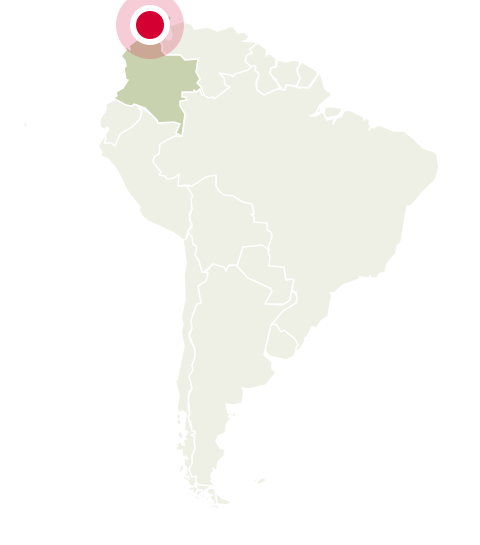
Where it is
In ColombiaBeach-and-jungle hiking in Tayrona: walking from El Zaíno through forest to Arrecifes, La Piscina and Cabo San Juan, swimming at the calmer beaches and often camping or sleeping in a hammock. Santa Marta is the gateway; Parques Nacionales' 2024 report gives 615,599 visitors for the year (stated in its text; the table itself was not readable).
Combine it with
Places that travel publishers pair with Tayrona & Santa Marta. The dots mark the months when both are in shoulder season.
We have not found monthly visitor counts for Tayrona & Santa Marta, so these seasons are an estimate: peak season is the months that sources name as peak or that fall in school holidays and major events.
Peak season
Includes our pick
December and January
Days 33°C, nights 23°CDays 91°F, nights 73°F
Rain: 0 to 8 mm a monthRain: 0.0 to 0.3 in a month
Fills up: Christmas, New Year and Reyes; Long holiday weekends (puentes festivos) 2027
Out of season
February
Days 34°C, nights 24°CDays 93°F, nights 75°F
Rain: 1 mmRain: 0.1 in
Closed: Respira Tayrona: whole park closed for the Indigenous peoples' rest periods
For dry weather with fewer people: February 16 to March, outside Holy Week (March 21 to 28, 2027), at low-season fees.
For dry weather with fewer people: February 16 to March, outside Holy Week (March 21 to 28, 2027), at low-season fees.
Low season
April and May
Days 33 to 34°C, nights 26°CDays 91 to 93°F, nights 79°F
Rain: 14 to 52 mm a monthRain: 0.5 to 2.0 in a month
Fills up: Long holiday weekends (puentes festivos) 2027
For low prices after Easter: April to May, as Visit Santa Marta suggests, with afternoon showers.
Peak season
June and July
Days 33°C, nights 25°CDays 91°F, nights 77°F
Rain: 60 to 62 mm a monthRain: 2.4 in a month
Closed: Respira Tayrona: whole park closed for the Indigenous peoples' rest periods
Fills up: Mid-year school vacations; Long holiday weekends (puentes festivos) 2027
For the Fiestas del Mar: July in Santa Marta's bays, in the mid-year high season; 2027 dates not yet announced.
Shoulder season
August
Days 33°C, nights 25°CDays 91°F, nights 77°F
Rain: 62 mmRain: 2.5 in
Fills up: Long holiday weekends (puentes festivos) 2027
Low season
September to November
Days 32 to 33°C, nights 24 to 25°CDays 90 to 91°F, nights 75 to 77°F
Rain: 74 to 127 mm a monthRain: 2.9 to 5.0 in a month
Closed: Respira Tayrona: whole park closed for the Indigenous peoples' rest periods
Fills up: Long holiday weekends (puentes festivos) 2027; October school recess (semana de receso)
For the quietest park: September to mid-October and November 3 onward, accepting rain, rougher seas and the October 19 to November 2 closure.
Tayrona & Santa Marta visitor numbers
As of November 22, 2026, the latest figures we have for Tayrona & Santa Marta run through 2025.
MeasuredOne total a year
2025
830,326
34.9% more than the 615,599 of 2024.
The national parks agency closed Tayrona from February 17 to March 5, 2026 (Resolution 091), in addition to the three closures a year agreed with the Indigenous communities. Colombia's national parks as a whole had 2.3 million visitors from January to September 2026, 47% more than a year earlier, according to the agency's director; that figure covers all the parks, not Tayrona alone. Next update: January 2027.
Non-resident foreigners COP 81,000 low season, 96,500 high season; Colombians and residents 25 and over 36,500 / 43,000; Bahía Concha sector COP 43,500 for non-resident foreigners all year. Resolution 551 of 2025, in force from January 1, 2026.
Official high season (fee seasons)
December 1 to January 31, June 1 to July 31, Holy Week (Palm Sunday to Easter Sunday), Friday-to-Monday holiday weekends, and the October school recess week; all other dates are low season.
Mandatory daily insurance
A daily insurance and rescue charge is required on top of the ticket, about COP 7,000 per person per day; Andrew and Emily39 and Beyond the Bucket List43 say cash only.
Entry requirements and hours
Passport (or copy) needed; bag check and short induction video. El Zaíno opens about 7 a.m. to 3 p.m. (often 8 a.m.), Calabazo 7 a.m. to 1 p.m., Bahía Concha 7 a.m. to 2 p.m.; Andrew and Emily39 gives 7 a.m. to 3 p.m. in high season and 8 a.m. to 5 p.m. in low season.
Book ahead (2)
Campsites and hammocks (Cabo San Juan, Arrecifes, Cañaveral)
Travelers advise: Book ahead for December to March and holiday weekends
Park lodging sells out daily in high season; some campsites take online or WhatsApp bookings, Calabazo-area options do not.
Entry tickets
Travelers advise: Buy ahead in busy periods
Most people still buy at El Zaíno on arrival; Andrew and Emily39 says online purchase is now possible on the official site and Johan Kruseman40 says tickets can sell out. Resolution 112 of 2026 directs Parques Nacionales to arrange advance ticket presales.
Closures (3)
Respira Tayrona: whole park closed for the Indigenous peoples' rest periods
February, June, October and November, every year
February 1 to 15 (Kugkui Shikasa), June 1 to 15 (Saka Juso), October 19 to November 2 (Nabbatashi); no visitor entry and ecotourism services suspended. Made permanent by Resolution 005 of 2024; held on these dates in 2025 and 2026. No separate 2027 announcement found, so 2027 dates assume the permanent schedule: February 1, 2027/02-15, June 1, 2027/06-15, October 19, 2027/11-02.
2026 one-off closure of the whole park (Resolution 091)
February and March
Closed indefinitely from February 17, 2026 over a governance and public-order situation, with no advance ticket sales during the closure (Article 6); on February 19 Indigenous communities reopened El Zaíno to visitors in protest despite the decree; the park formally reopened March 5, 2026 under Resolution 112. Sendero Kogui stayed closed and Bahía Concha was limited to pedestrians and light electric carts until road repairs.
Land entrances at Calabazo and El Zaíno-Cañaveral restricted (2026)
After the June 16, 2026 reopening, Parques Nacionales kept the Calabazo and Zaíno-Cañaveral land accesses temporarily closed, citing mobility problems on the Santa Marta-Palomino road; Bahía Concha, Neguanje and sea access stayed open. No source confirms whether these entrances reopened, or when the park reopened after the October 19 to November 2, 2026 closure.
Rules, fees and closures can change. Check the official site before you go:
We have not found monthly visitor counts for Tayrona & Santa Marta, so these seasons are an estimate from guides, news reports and traveler accounts. In all, 45 sources back the seasons, dates and rules.
How we pick the months
Our pick is usually the months just outside the peak: the weather is good, there are fewer people and prices are often lower. Missing the biggest crowds and the harshest weather makes for a better trip. When the reason to go happens only at the peak, the pick follows it. The seasons come from comparing official visitor counts, where they exist, weather records and many guides, news reports and traveler accounts, and they follow where those sources agree.
Checked November 2026. Visitor numbers are checked every quarter; next update January 2027.
Weather: station normals as published in Wikipedia climate tables (originally from national weather services); ERA5 reanalysis from the Copernicus Climate Change Service via Open-Meteo (CC BY 4.0).
Spotted something out of date?
Prices, rules and dates change. Tell us and we’ll check it against the source.